
Yoga in India: Go Beyond the Practice, Discover its Roots
A journey to India can be more than a holiday. For many travelers, it can be an opportunity to discover yoga at its roots and experience the practice in a deeper, more meaningful way. India offers an opportunity to experience yoga in the land where its traditions have passed down for thousands of years. Here, yoga becomes a way to slow down, reconnect with yourself and understand the deeper meaning behind the practice.
The Origins and Evolution of Yoga
The word yoga comes from the Sanskrit root ‘Yuj’, meaning ‘to join’ or ‘to unite’. It reflects the traditional idea of bringing the mind, body and spirit into greater harmony. Yoga has its roots in ancient India and is believed to have developed 5000 years ago.
The earliest teachings can be traced to the Vedas, while later texts such as the Upanishads, Bhagavad Gita and Patanjali’s Yoga Sutras helped shaped its philosophy and practice. Over time, yoga evolved into different traditions and schools including Hatha, Ashtanga, Iyengar, Vinyasa and Kundalini. While these approaches may differ, they share the underlying idea of bringing greater harmony to the body, mind and the inner self.
Yoga is More Than Physical Postures
For me, yoga becomes truly meaningful when I look beyond the physical postures. Asana helps prepare and strengthen the body, while pranayama brings awareness to the breath. Mindfulness encourages me to my thoughts and sensations without judgement and meditation creates space for stillness and deeper self-awareness.
Together, these practices form a more complete yoga experience. The aim is not simply to become more flexible or master a difficult posture, but to develop greater awareness, balance and a sense of inner calm.
Why Practice Yoga in India
Practicing yoga in India can feel different because the practice is closely connected to the country’s spiritual and cultural traditions. Instead of being viewed only as exercise, yoga is often experienced as a way of living and understanding oneself.
I can practice alongside experienced teachers, explore traditional teachings, experience meditation and discover how yoga connects with Ayurveda, mindful living and nature. The surroundings themselves can become the part of the experience – from the sound of the temple bells and Sanskrit chants to quiet moments surrounded by greenery.
Rishikesh and the Himalayan Connection
Rishikesh is one of the world’s best-known destinations for yoga and meditation. Famously called as the ‘Yoga Capital of the World’, it is set along the sacred Ganges and surrounded by the foothills of the Himalayas. It has attracted spiritual seekers and yoga practitioners for generations.
Today, I can find everything from traditional Hatha and Ashtanga practices to meditation programmes and residential retreats. Rishikesh became internationally famous after The Beatles visited Maharishi Mahesh Yogi’s ashram in 1968, further drawing global attention to its spiritual traditions.
Yoga in Nature
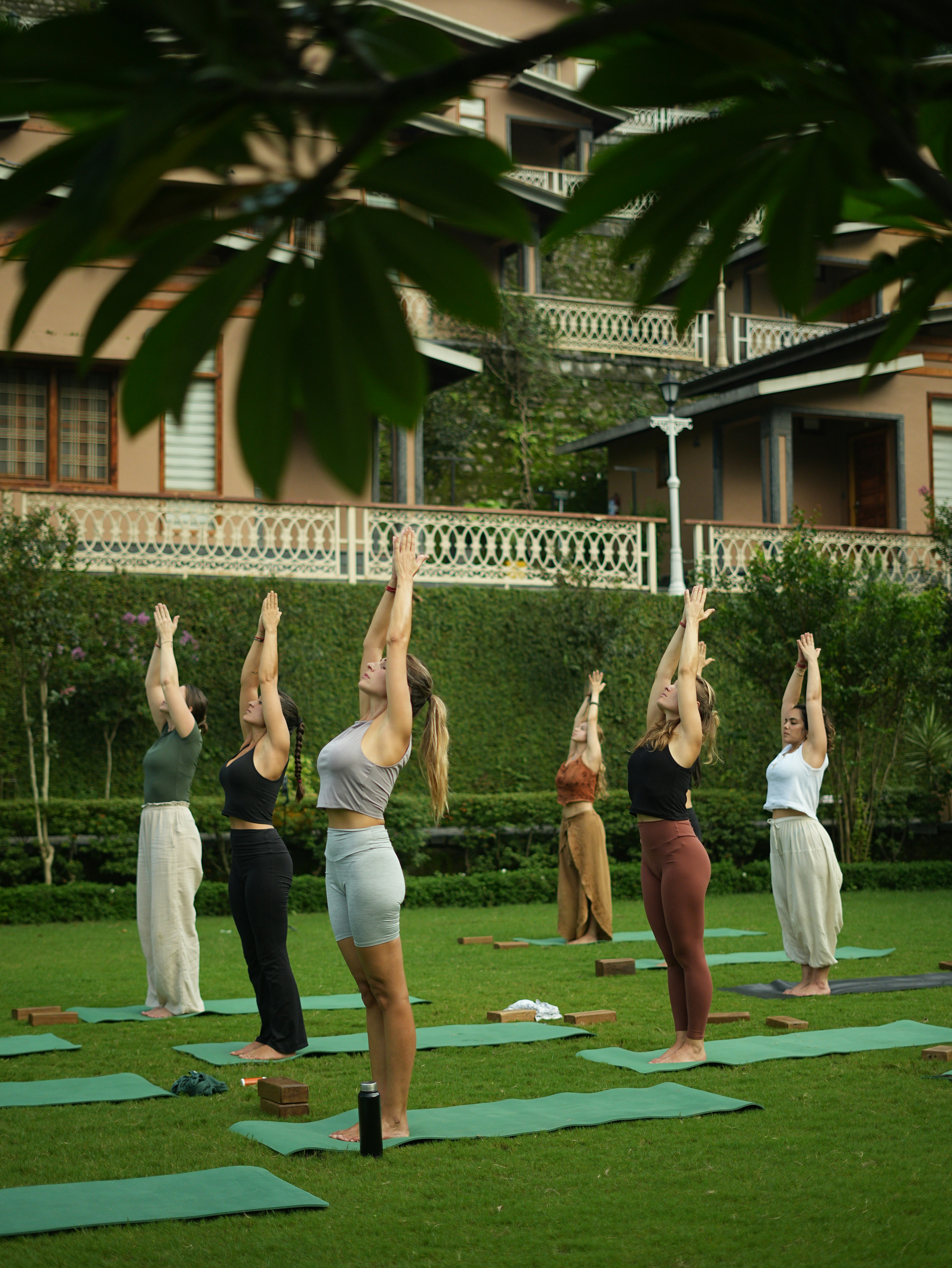
One of the things I value most about practicing yoga in India is the opportunity to take the practice outdoors. I can practice by the sea, surrounded by the greenery or in the peaceful landscapes of the mountains.
Being close to the nature creates a natural sense of quiet and allows me to step away from the distractions of everyday life. Whether I choose a traditional ashram or a more comfortable wellness retreat, the setting can make the experience feel more immersive.
Finding the Right Yoga Experience
India offers a wide range of yoga experiences. I can choose an intensive yoga course, a relaxed retreat combining yoga and Ayurveda, a meditation-focused programme or simply a few guided sessions during my travels.
The experience can also be adapted to my level. Beginners can learn the foundations at their own pace while experienced practitioners can deepen their understanding of asana, pranayama, meditation and yogic philosophy.
What to Expect from a Yoga retreat in India
A typical yoga retreat may begin with an early morning practice, followed by meditation, a nourishing breakfast and wellness activities or treatments. The day may include another yoga or meditation session, time for reflection, nature walks or simply some quiet time.
Rather than filling every moment with activities, many retreats encourage you to slow down and become more mindful of how you eat, breathe, move and rest. This creates space to focus not only on your physical wellbeing but also on your physical wellbeing but also on your mental and emotional balance.
Begin Your Yoga Journey in India
Yoga in India gives you the chance to experience the practice beyond the postures – to explore its history, philosophy and connection with mindful living. Sometimes, the most meaningful part of yoga is not how far you can stretch but how deeply you can connect with yourself.
Whether you are stepping into a yoga mat for the first time or looking to deepen an established practice, India offers a setting for every journey.
Daxta Pandey – September 2026
-

Tulah Clinical Wellness: A Distinctive Expression of Luxury, Medicine and Personalized Wellbeing -
Shreyas Retreat: An Integrated Approach to Personalized Wellness -
Amal Tamara: A Journey into Personalized Healing and Ayurvedic Wellness -

Discovering Tulah Clinical Wellness: Where Medical Science Meets the Art of Wellbeing -
Yoga in India: Go Beyond the Practice, Discover its Roots